

Source: hibridosyelectricos.com
The Madrid district of Villaverde will be the place where all the technological advances related to mobility or new elements in which sustainability will have a good part of the protagonism will be tested in a real environment. This has been approved by the Governing Board of Madrid in an initial text on the new ordinance that will regulate the so-called "Madrid Mobility Sandbox".
This environment will consist of a 20 square kilometer space where startups, companies, enterprises, organizations and institutions will be able to test the technical feasibility of their technological products prior to their commercial and mass launch.
Thus, the Villaverde District is presented as the largest real-world test site in Europe. The first estimates speak of the possible creation of between 3,000 and 5,000 jobs in the area, as well as the investment of more than 300 million euros for the adaptation of the environment and the implementation of its own projects.
Although this neighborhood will continue to be open to its own inhabitants and those coming from outside, its territory will be properly delimited to delimit the test areas, as these will be totally controlled by means of different security devices.
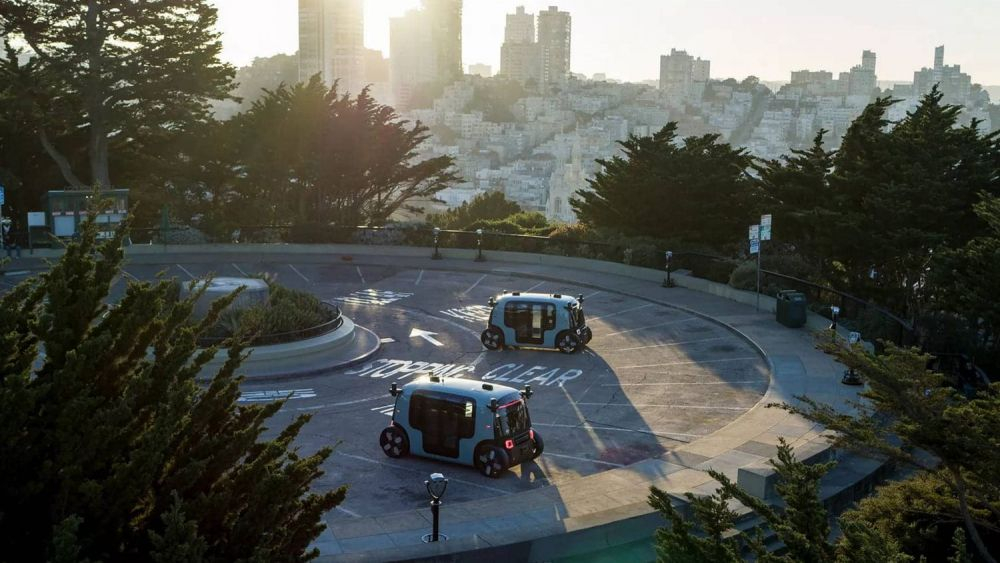
Madrid is thus positioned at the forefront of technological development environments in a totally open area. To date, there are only two other areas in the world that meet the characteristics of the Madrid district, and these are in California and Singapore.
According to Begoña Villacís, deputy mayor of Madrid, during her public presentation, the main objective of this movement will be to make public spaces more flexible for companies to test their advances, such as autonomous home delivery robots, driverless cars or even advanced urban elements, such as streetlights that regulate their light output according to the traffic on the street or drones for different activities; in short, solutions that integrate a high level of artificial intelligence, although always within a framework of safety for the population and their environment.
Several world-renowned corporations have already taken a special interest in this Madrid-based project. Goggo Network (dedicated to the technology of autonomous delivery robots), Gobalvia or eHang (companies specialized in transport drones, both for goods and people), and even the possibility of testing autonomous cars by the Nebrija University and FEM Expert.
Due to the high interest of technology companies to test their advances in Villaverde, the consistory has accelerated the whole process for its habilitation, since it was a project that had been under consideration for more than two years.
For the moment, no specific date is known when the different technologies will land in Villaverde to start their tests; however, this does mean a strong support from the Madrid City Council for its final achievement, which is expected to start as soon as possible.